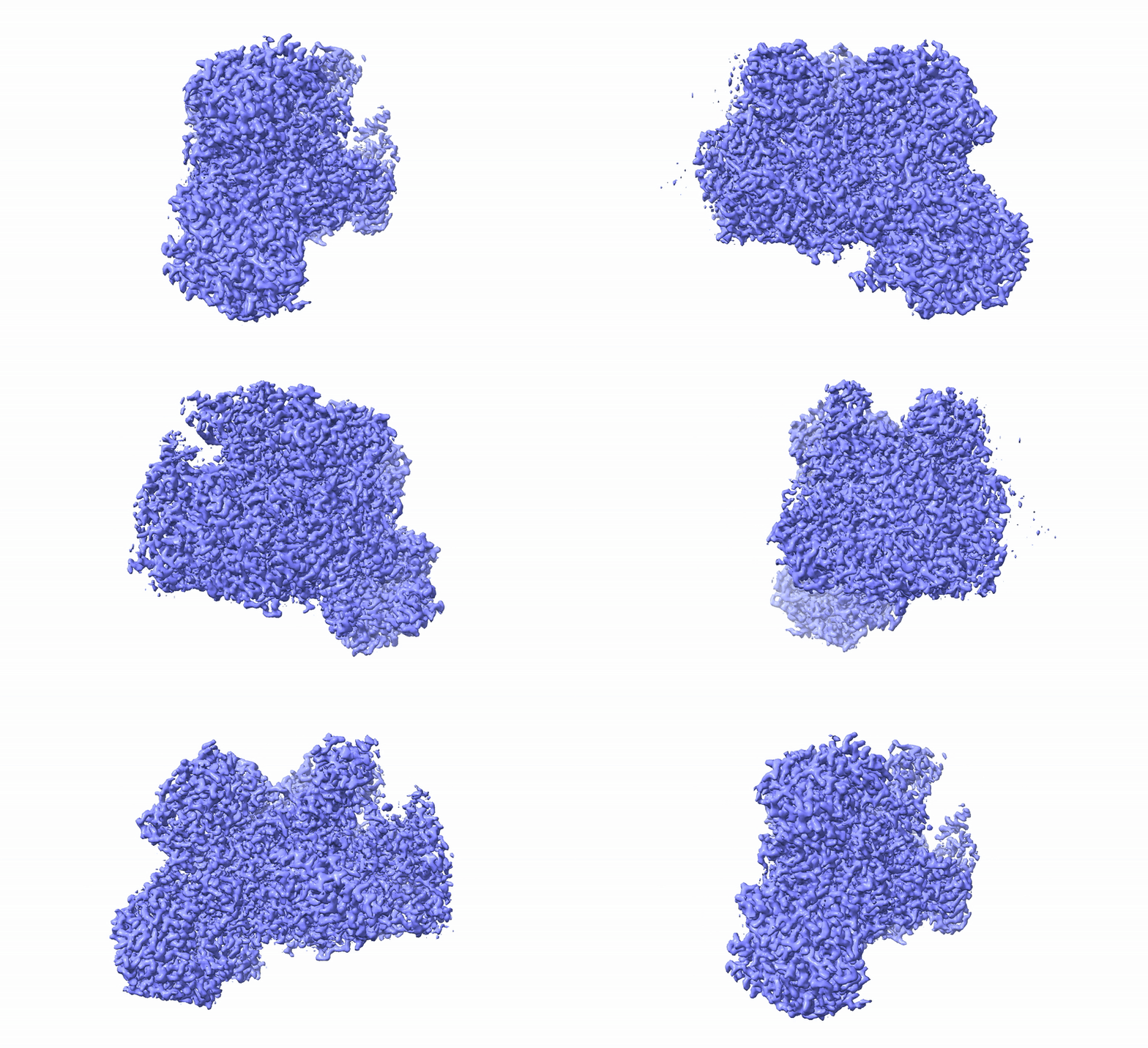
Static INR
A conventional INR maps coordinates to a signal through a single fixed-depth transformation.
Single pass, fixed-depth transformation.
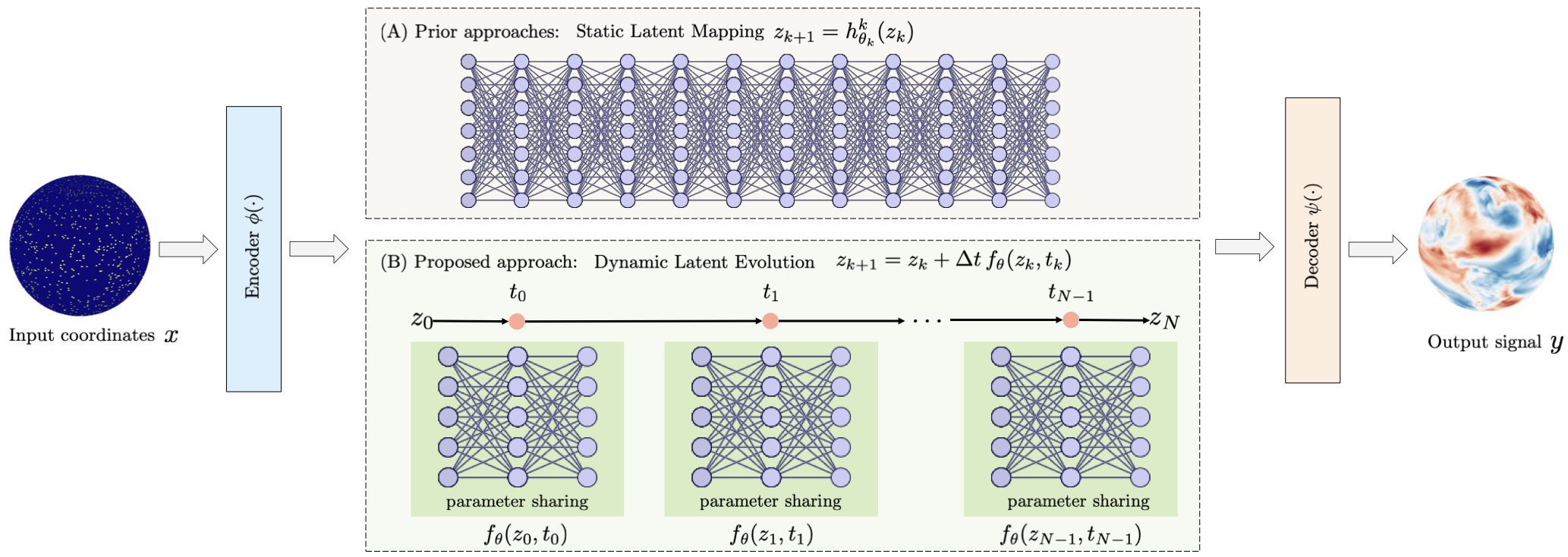
DINR replaces static coordinate-to-signal mappings with continuous latent dynamics, improving expressivity, trainability, and high-frequency reconstruction.
Implicit Neural Representations (INRs) provide a powerful continuous framework for modeling complex visual and geometric signals, but spectral bias remains a fundamental challenge, limiting their ability to capture high-frequency details. Orthogonal to existing remedy strategies, we introduce Dynamical Implicit Neural Representations (DINR), a new INR modeling framework that treats feature evolution as a continuous-time dynamical system rather than a discrete stack of layers. This dynamical formulation mitigates spectral bias by enabling richer, more adaptive frequency representations through continuous feature evolution. Theoretical analysis based on Rademacher complexity and the Neural Tangent Kernel demonstrates that DINR enhances expressivity and improves training dynamics. Moreover, regularizing the complexity of the underlying dynamics provides a principled way to balance expressivity and generalization. Extensive experiments on image representation, field reconstruction, and data compression confirm that DINR delivers more stable convergence, higher signal fidelity, and stronger generalization than conventional static INRs.
DINR is a plug-and-play dynamical layer for coordinate-based representations. The same coordinate input becomes an evolving latent state, and the learned vector field is shared across the trajectory.
A conventional INR maps coordinates to a signal through a single fixed-depth transformation.
Single pass, fixed-depth transformation.
DINR turns the latent representation into an initial condition for a neural ODE, then decodes the final state.
Iterative trajectory updates with a shared vector field.
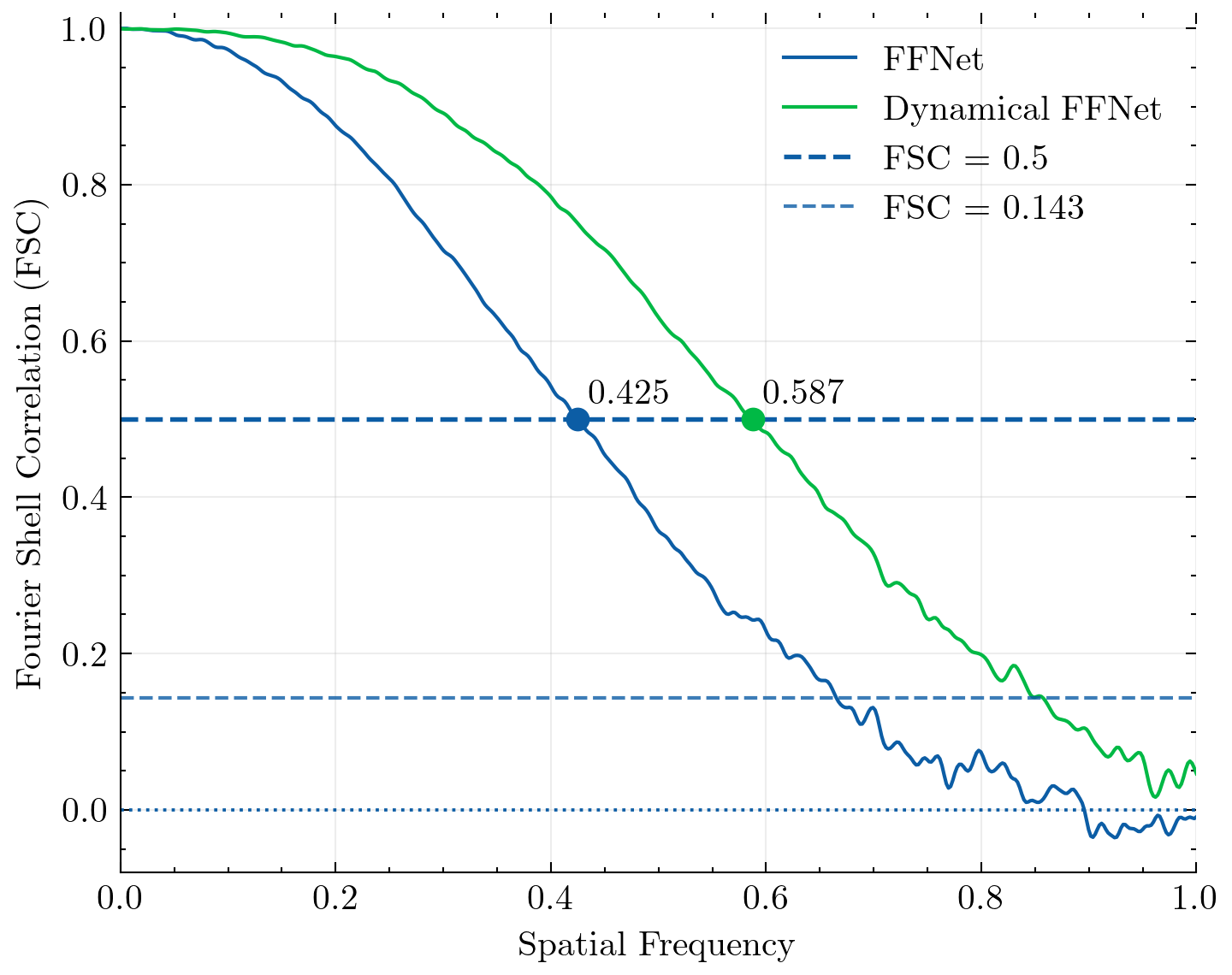
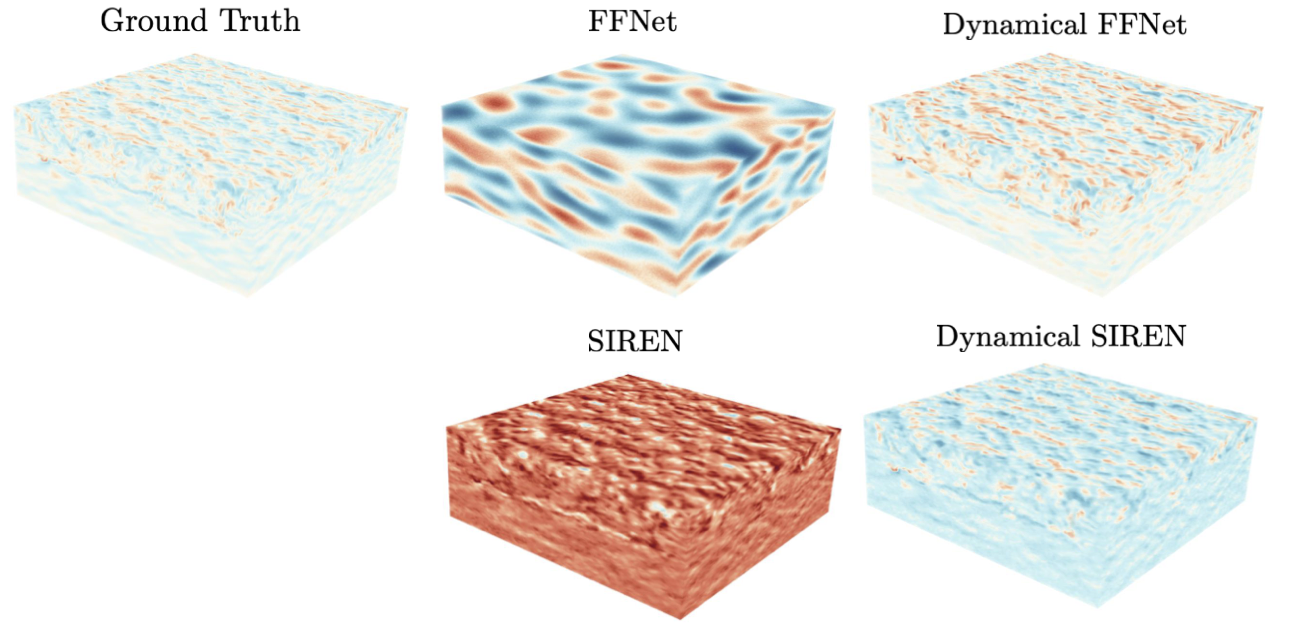
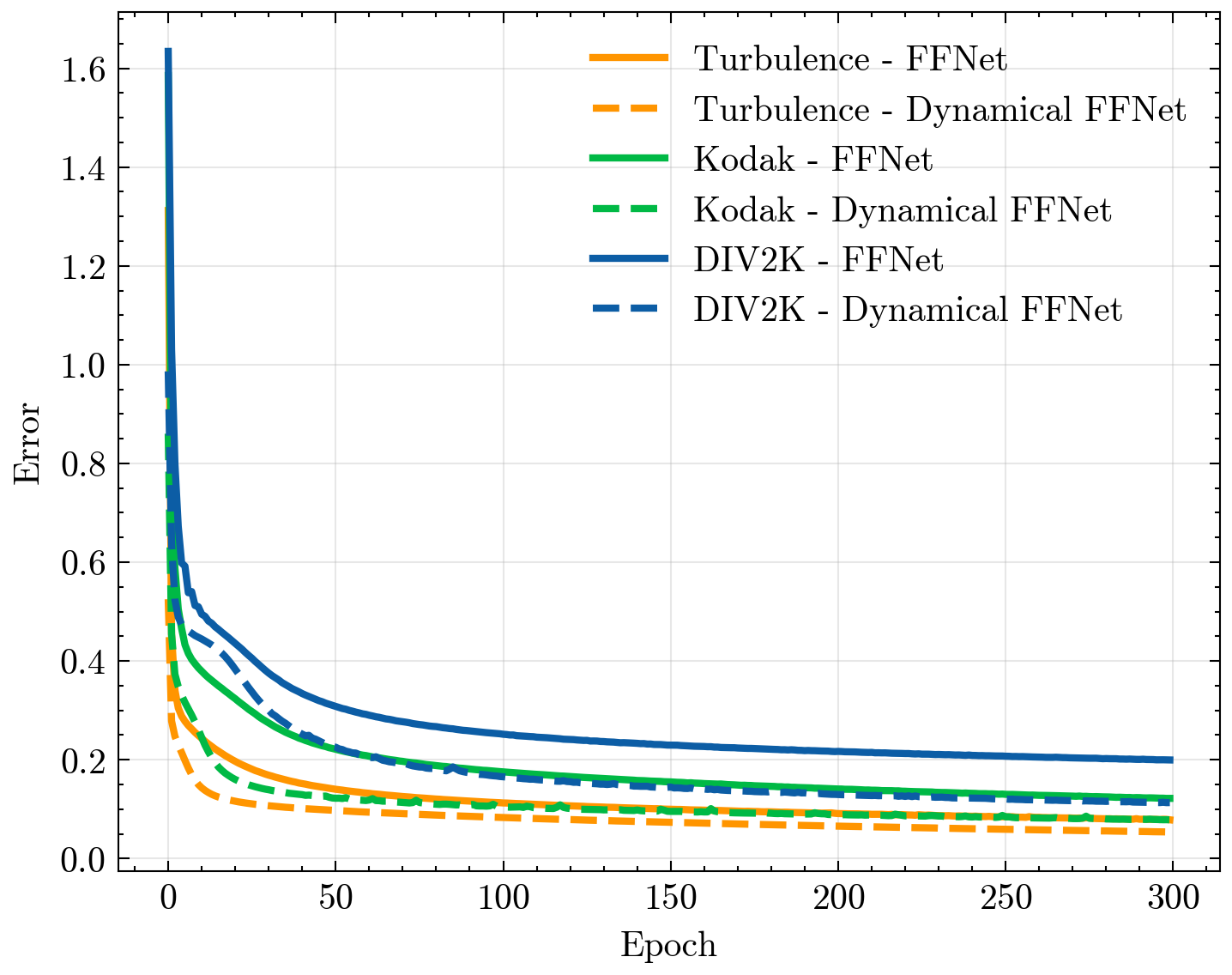
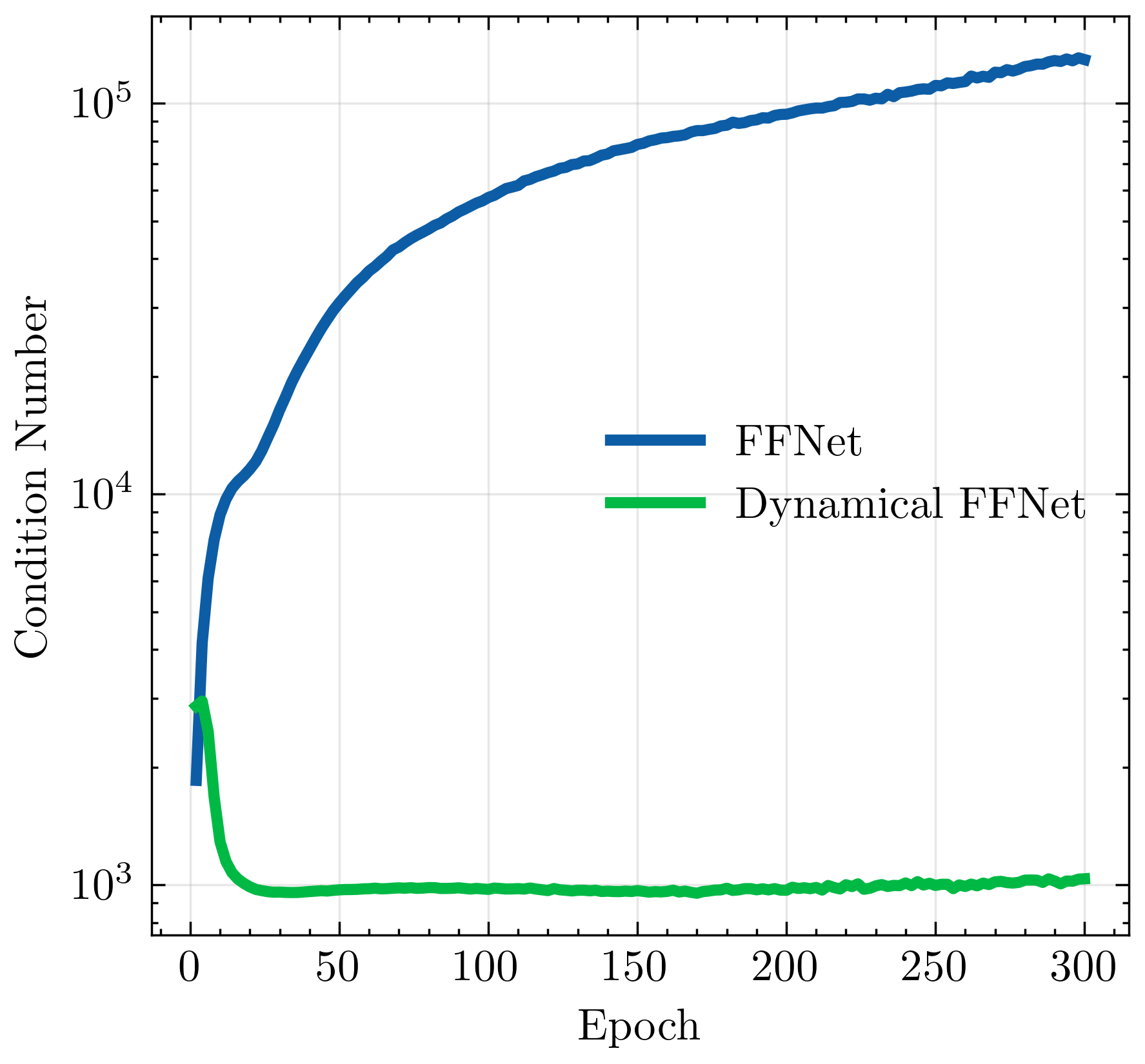
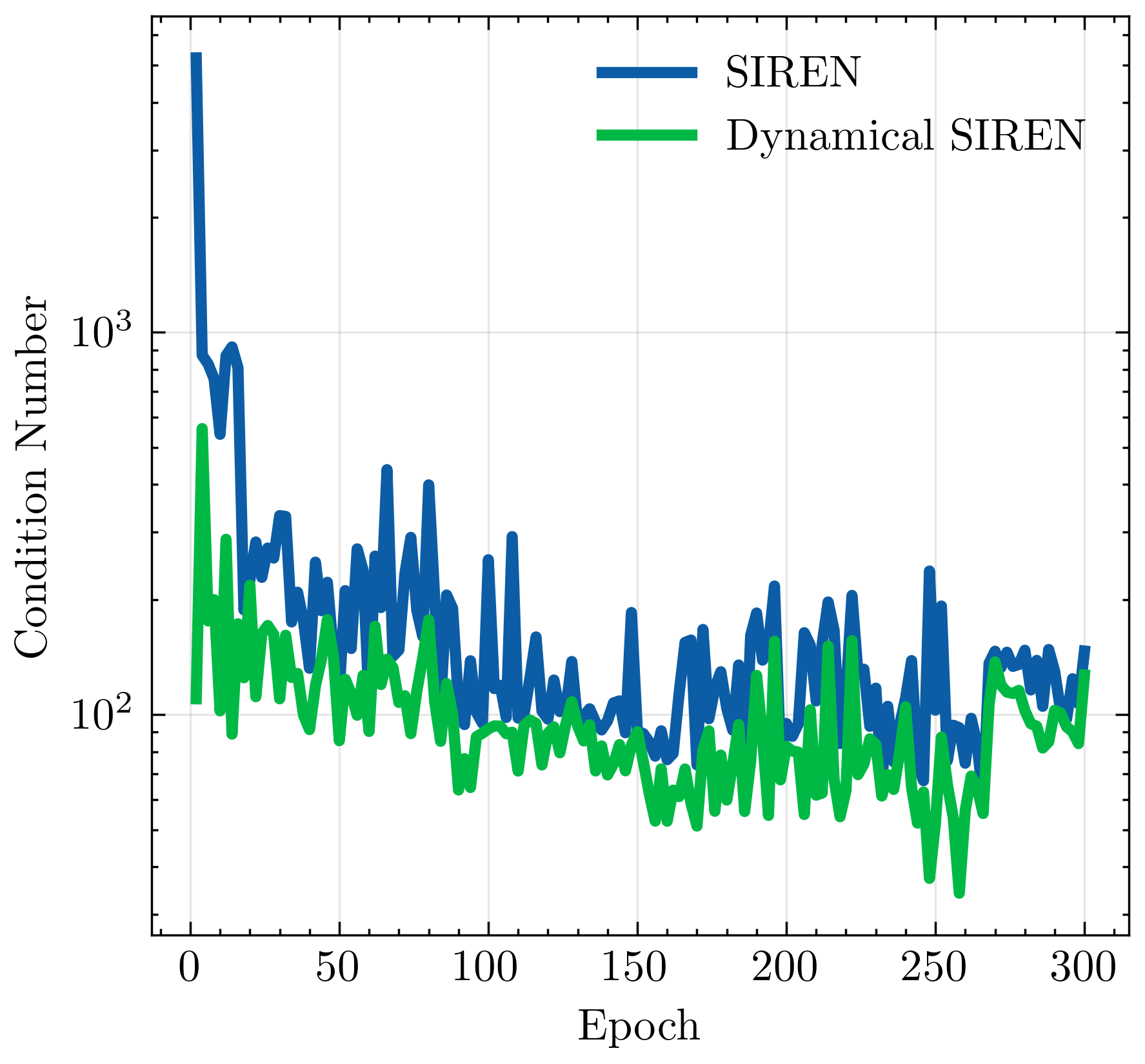
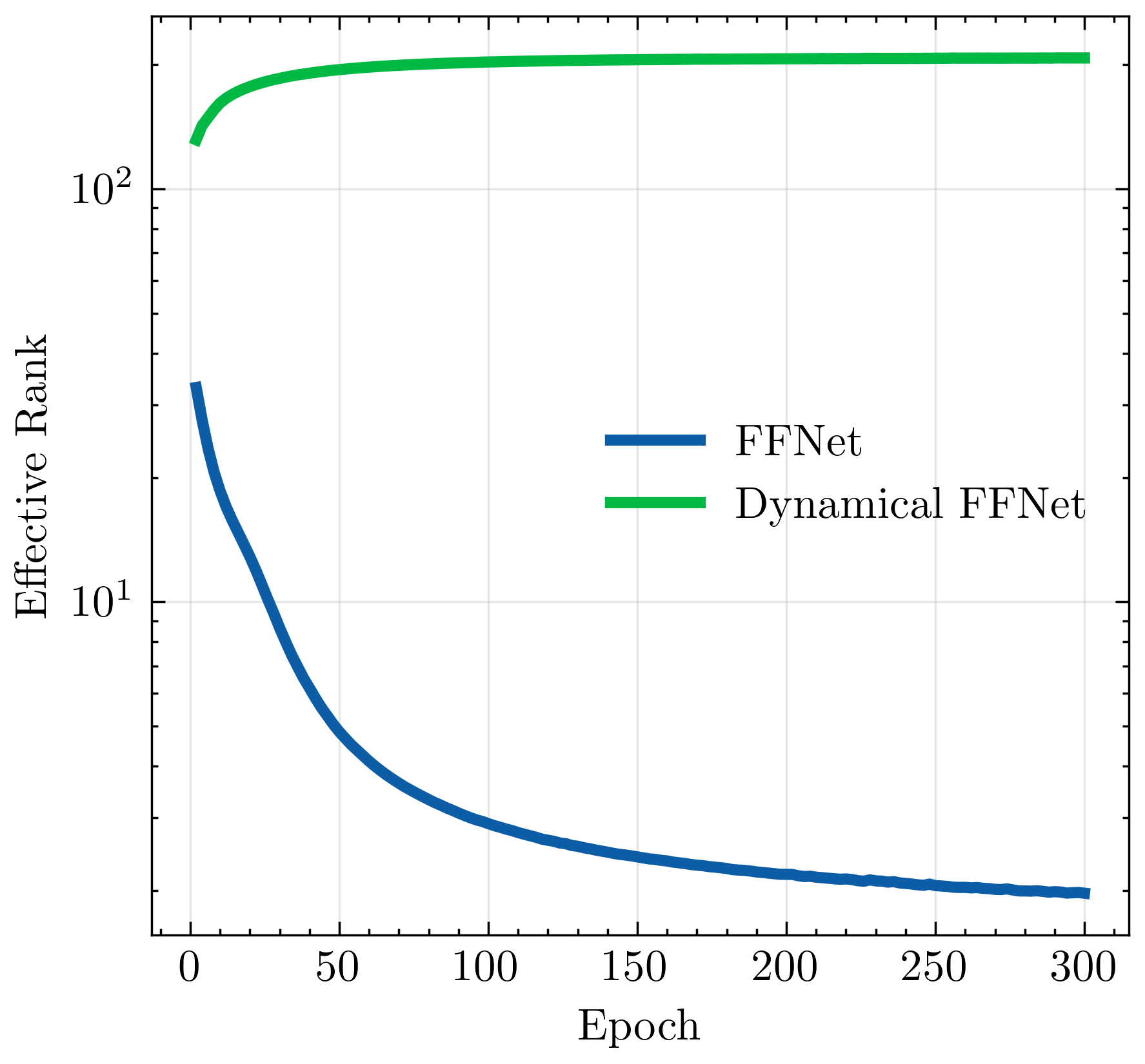
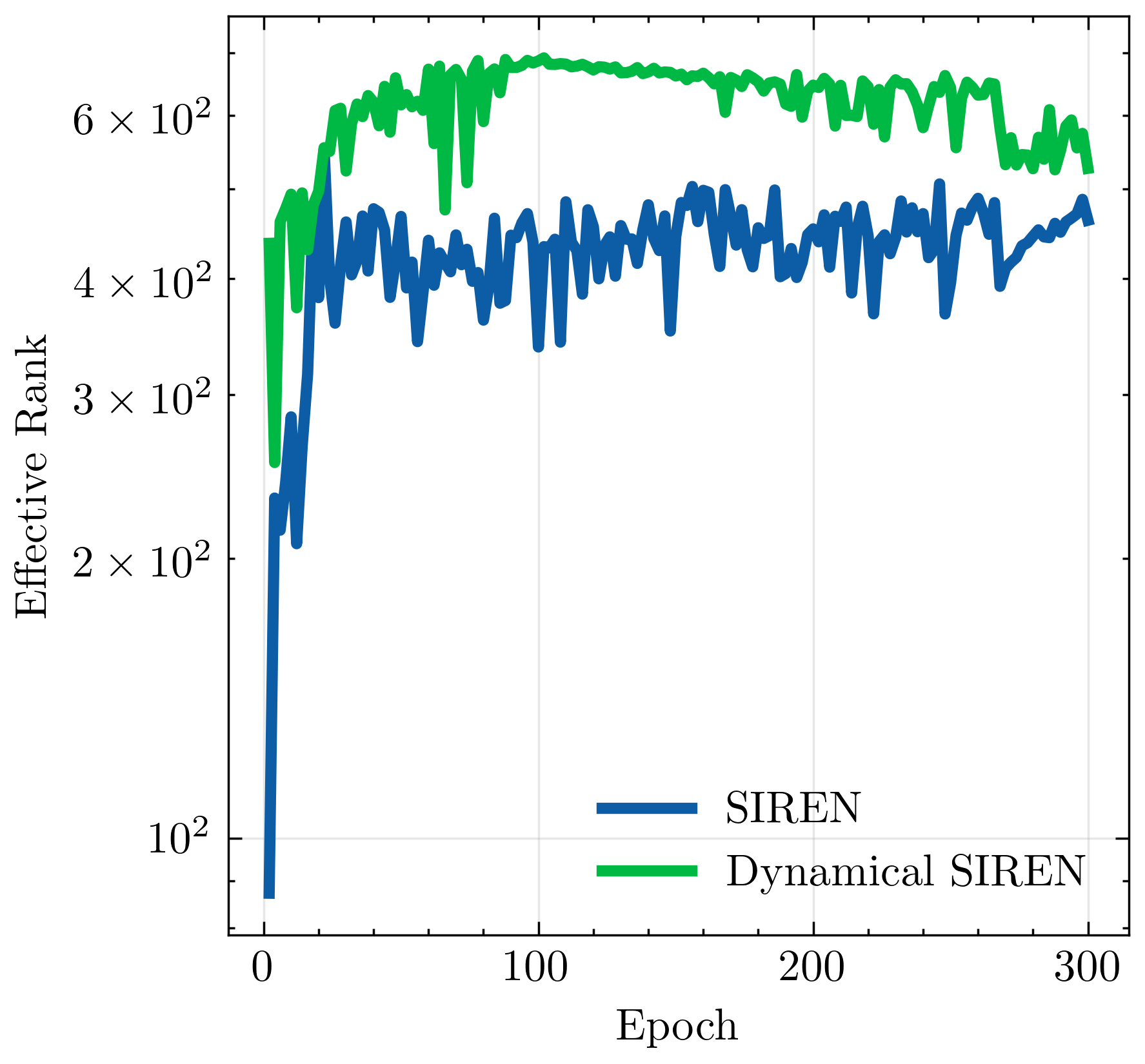
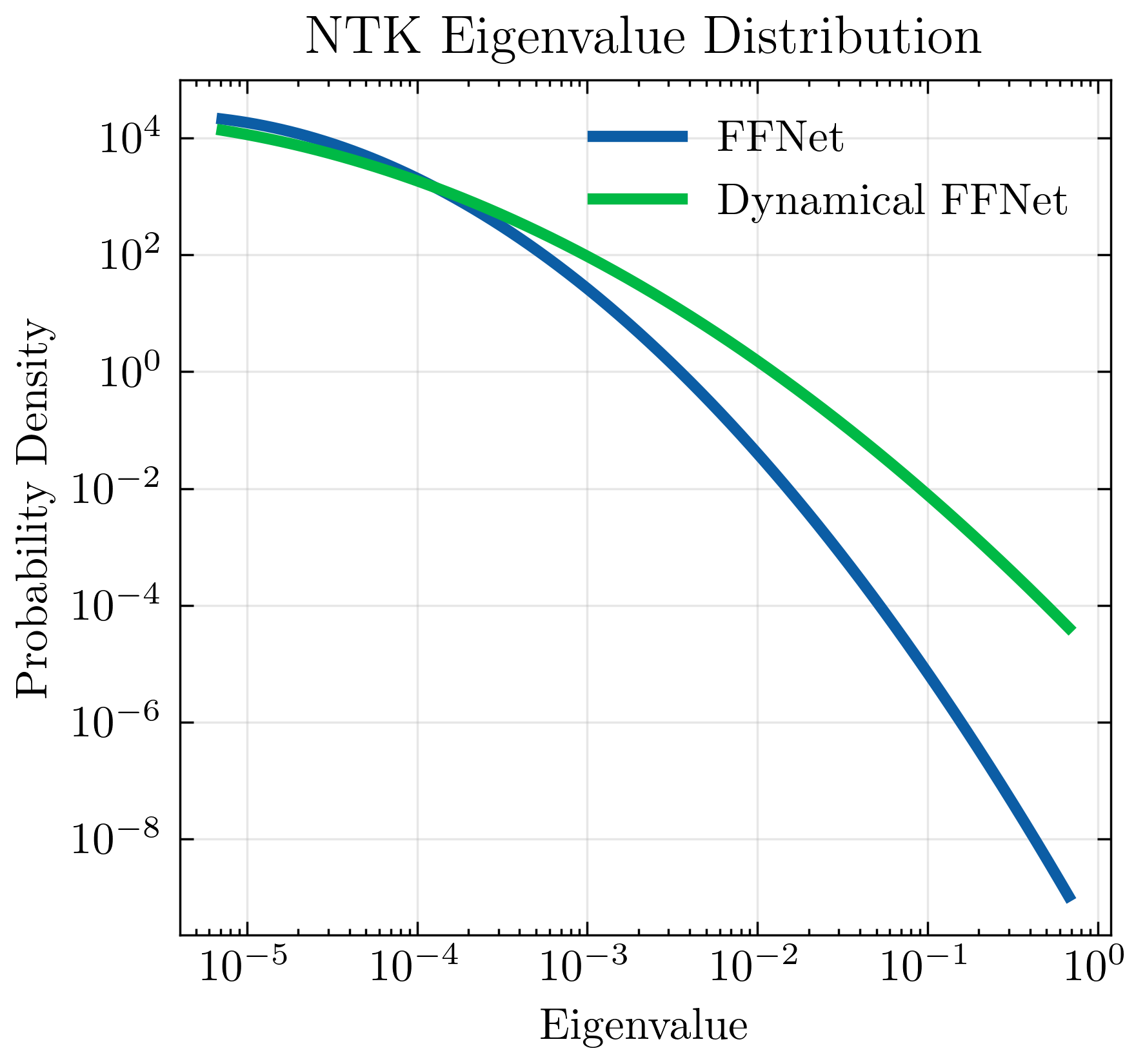
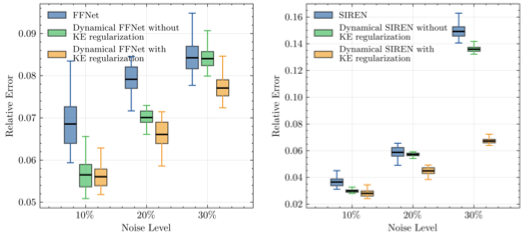
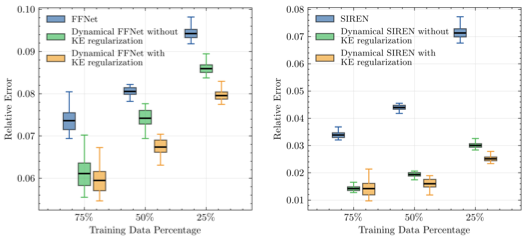
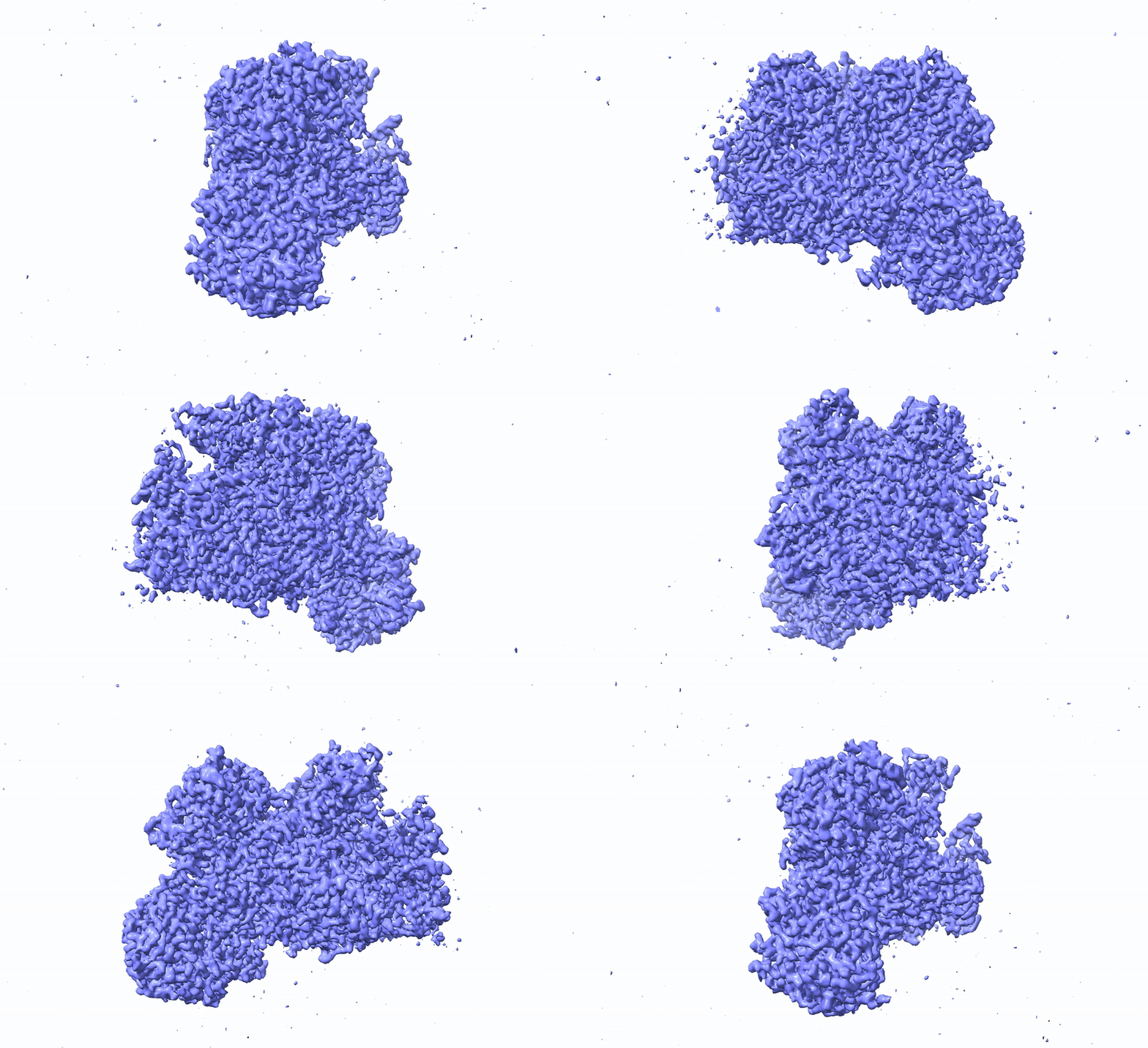
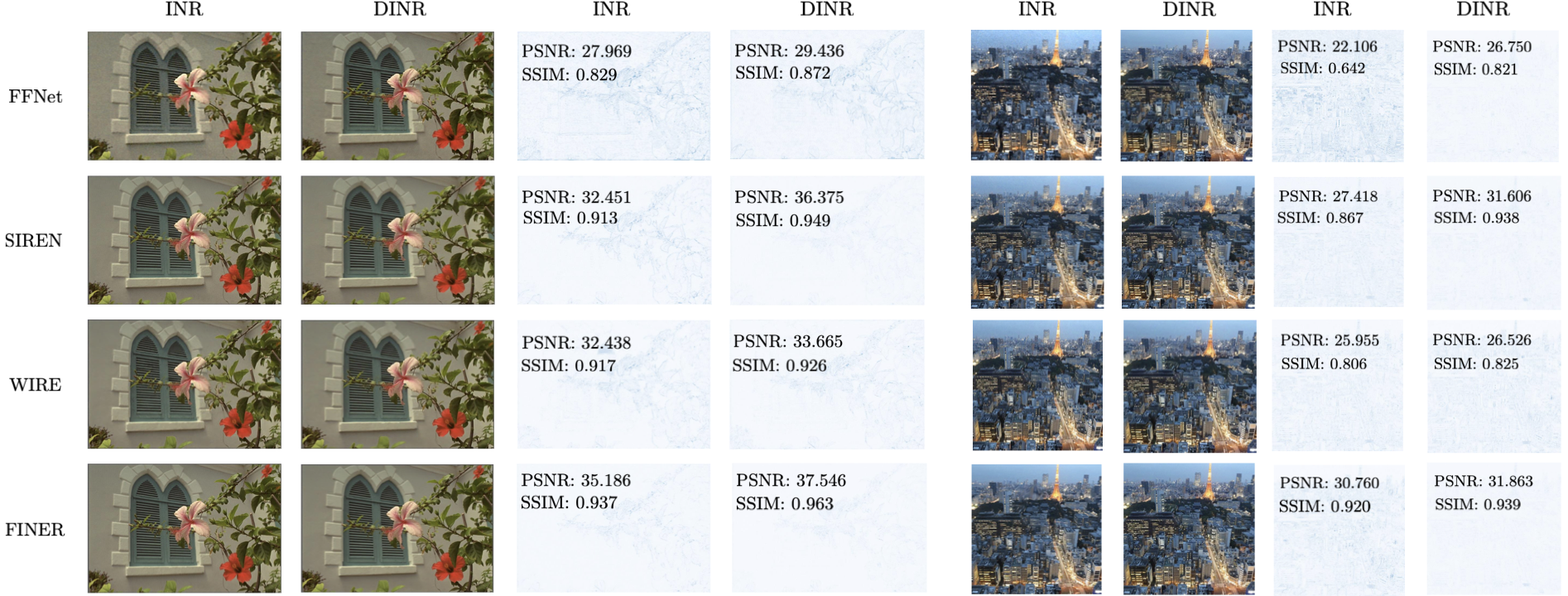
Across representation quality, scientific compression, sparse 3D reconstruction, optimization behavior, regularization, and sensitivity, DINR consistently improves static INR backbones.
DINR improves PSNR/SSIM across FFNet, SIREN, WIRE, and FINER backbones on DIV2K/Kodak-style image representation tasks.
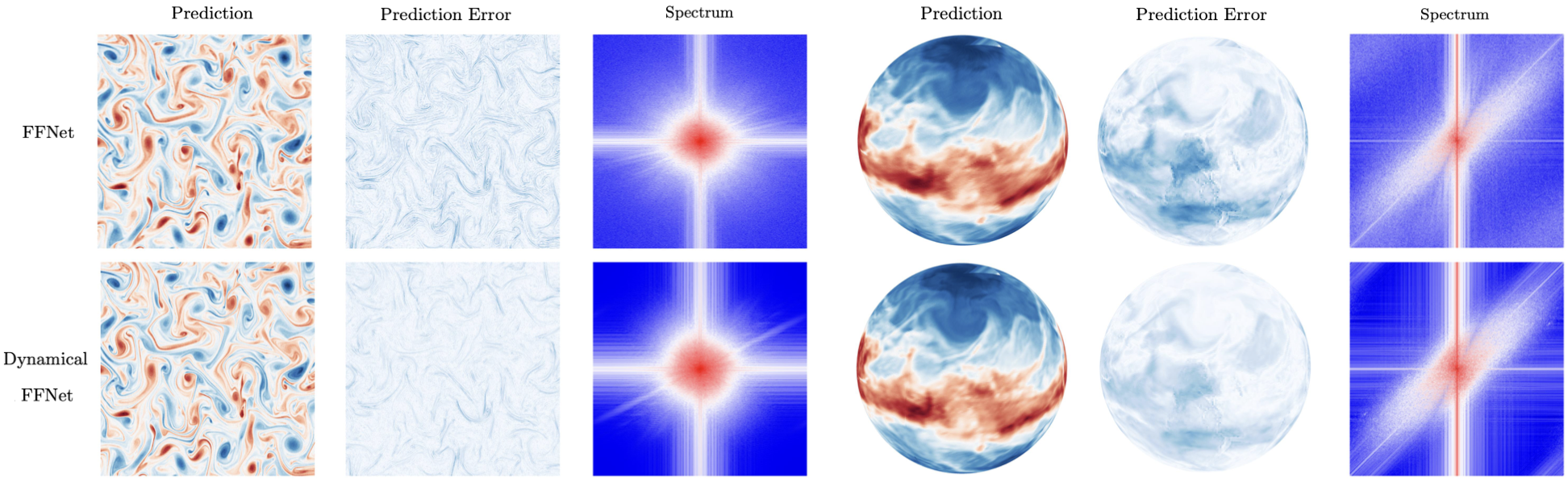
DINR reduces model size and improves compression by sharing parameters across repeated latent-dynamics evaluations, while preserving visual and spectral fidelity.
Visual and spectral comparisons include prediction, error map, and 2D power spectrum.
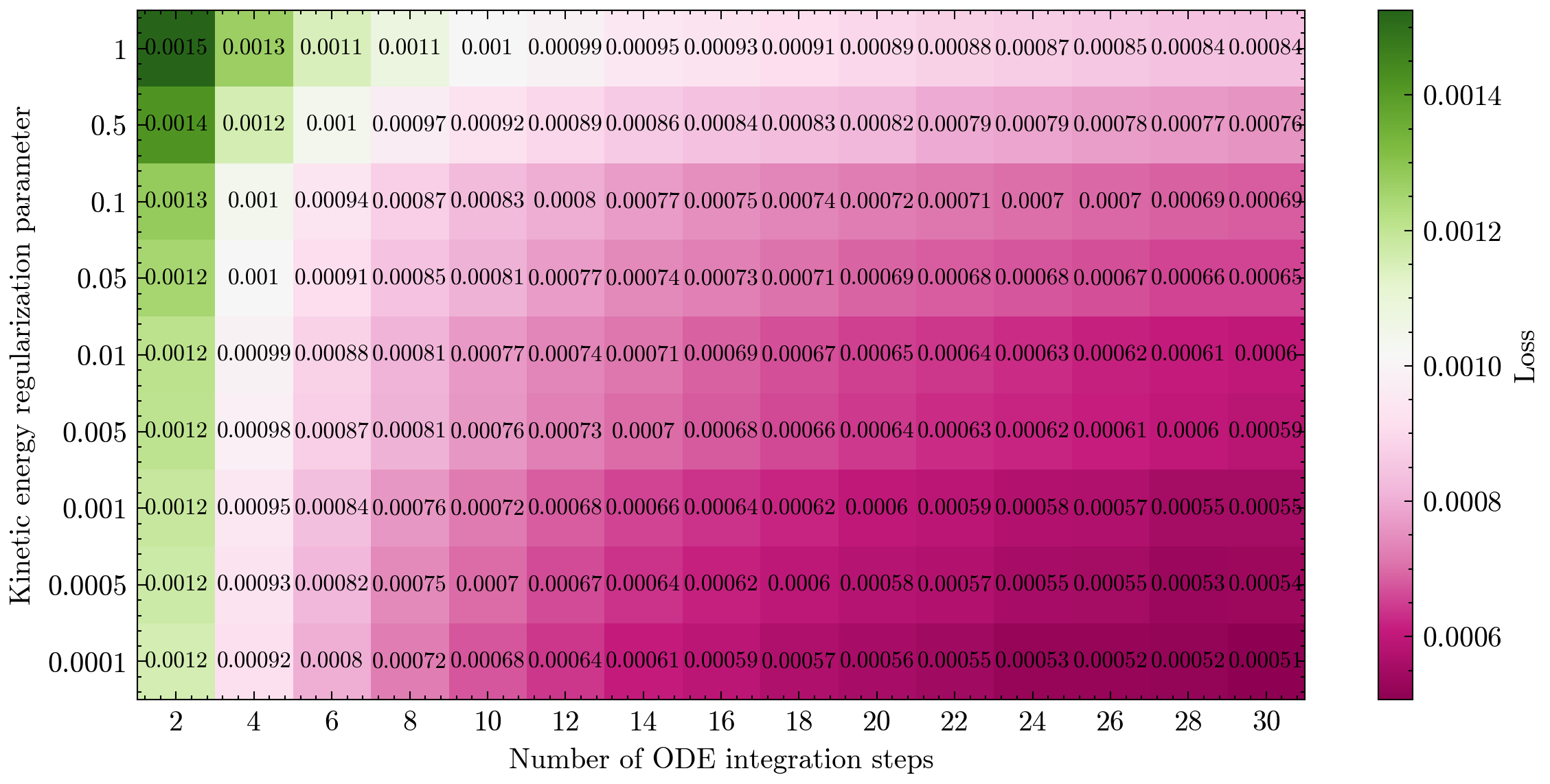
More ODE integration steps generally improve performance; overly strong KE regularization can over-constrain the dynamics.
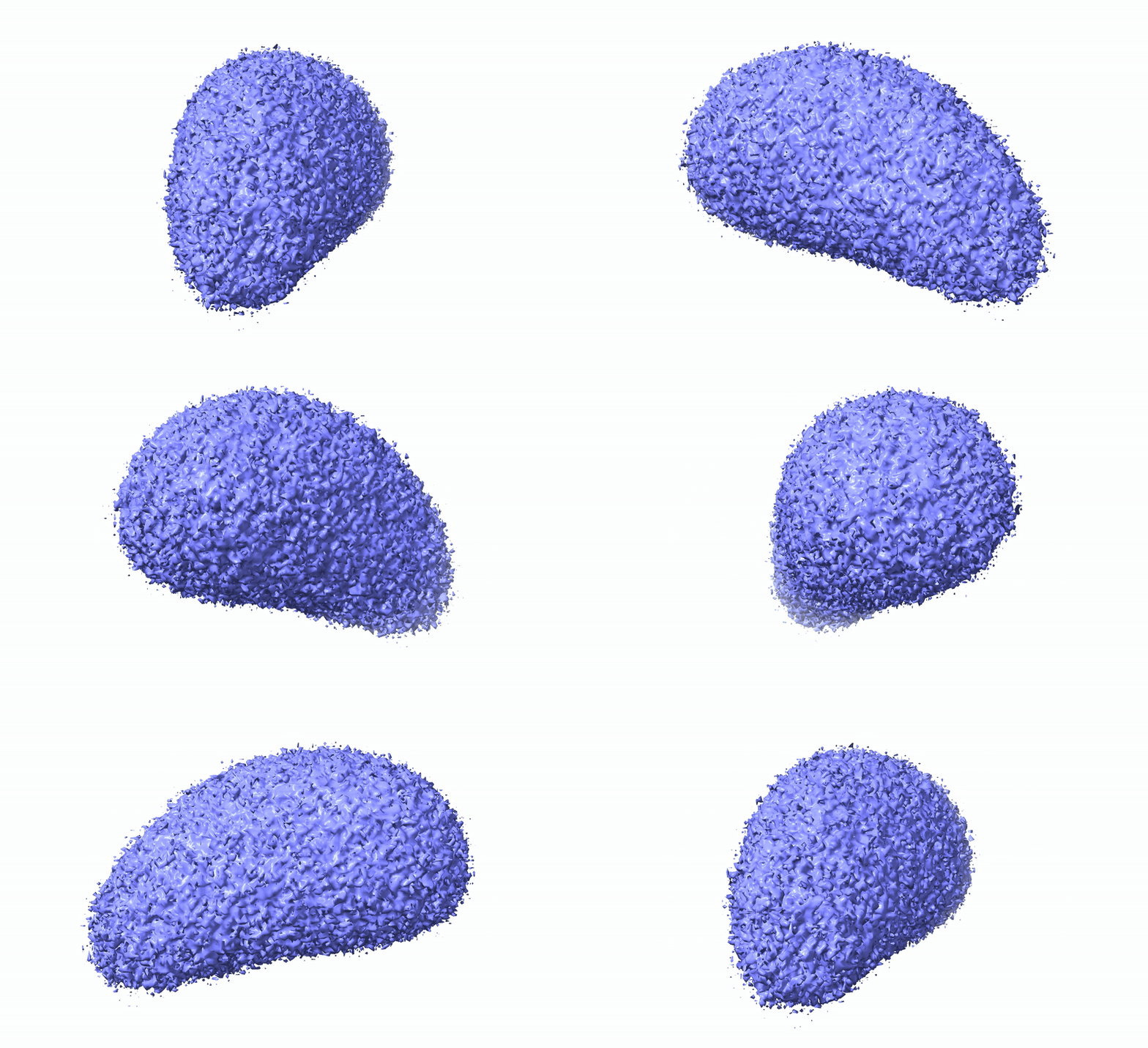
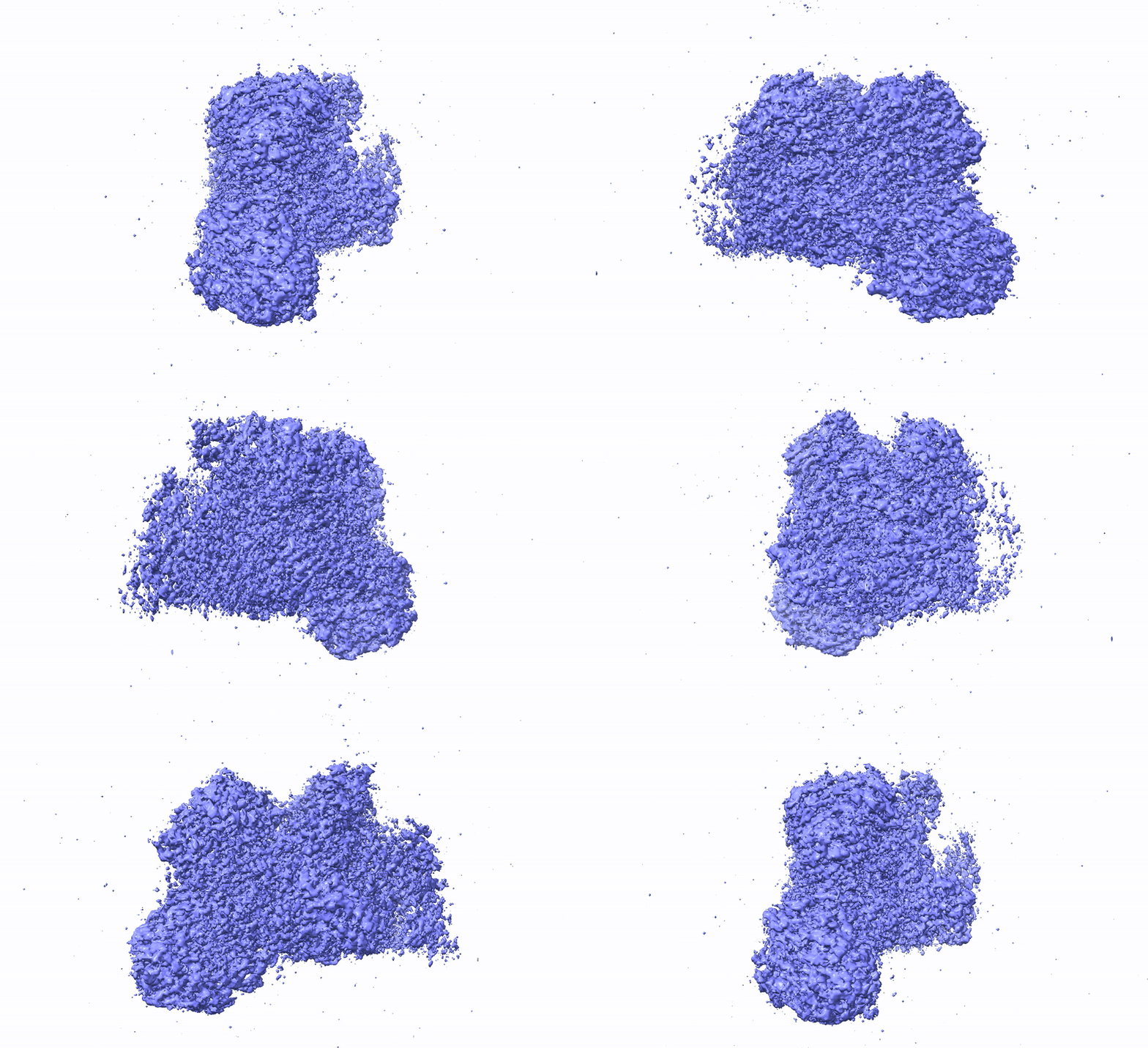
The training animations show the same baseline backbones before and after adding dynamical latent evolution. Watch for sharper high-frequency details and more faithful reconstruction in the dynamical variants.
DINR has higher per-iteration cost because the shared dynamical module is evaluated repeatedly along the latent trajectory. Future work can explore adaptive step-size solvers, higher-order integration, and more efficient implementations, while extending the framework to large-scale and multimodal datasets.
@article{park2025dynamical,
title={Dynamical Implicit Neural Representations},
author={Park, Yesom and Kan, Kelvin and Flynn, Thomas and Huang, Yi and Yoo, Shinjae and Osher, Stanley and Luo, Xihaier},
journal={arXiv preprint arXiv:2511.21787},
year={2025}
}